Film speeds and how to use them
So you've bought a film camera and you're not sure what the different numbers on rolls of film are about? Here's a quick guide!
ISO
ISO stands for International Organisation for Standards, which isn't very useful information, but when it comes to cameras and film what the ISO denotes is the light sensitivity of the film. This is often referred to as the "speed" of the film. ISO speeds exist on modern digital cameras as well and function very similarly, though there is a difference between digital noise and film grain which I won't cover this time.
Higher number = faster speed = more sensitive to light = more grainy
Lower number = slower speed = less sensitive to light = less grainy
As examples, ISO 100 film is "slow" and 800 is "fast".
So with that in mind, when should you use different speeds?
ISO 100-ish, and under
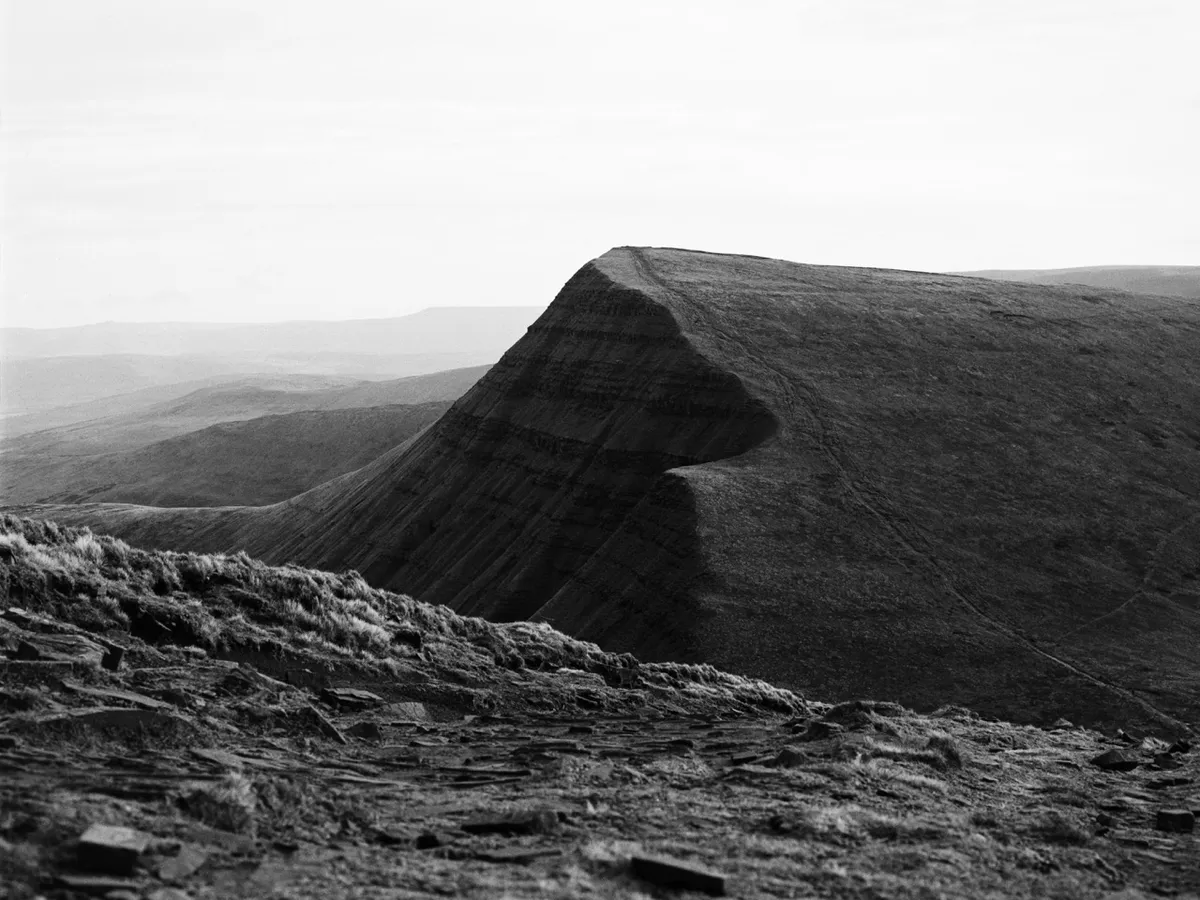 Ilford FP4+ in 120 format, on a Mamiya 645 1000s
These are slower films and what I often use for landscape photography, where there's usually plenty of light or I'm using a tripod. They render tons of detail and that's perfect for big landscapes. Speeds even slower than 100 are challenging to shoot handheld, and common speeds you'll find are 80 and 64, but there are even slower films about!
These films will usually produce very fine grain and high detail, but you're not going to be able to easily shoot them indoors. If you want deep depth of field you're going to need a tripod. However they're usually possible to shoot on bright sunny days outdoors without a tripod, and are great for summer.
Some examples I like to shoot:
- Ilford FP4+ 125
- Ilford Ortho 80
- Kodak T-MAX 100
- Kodak Ektar 100
ISO 200 film and similar
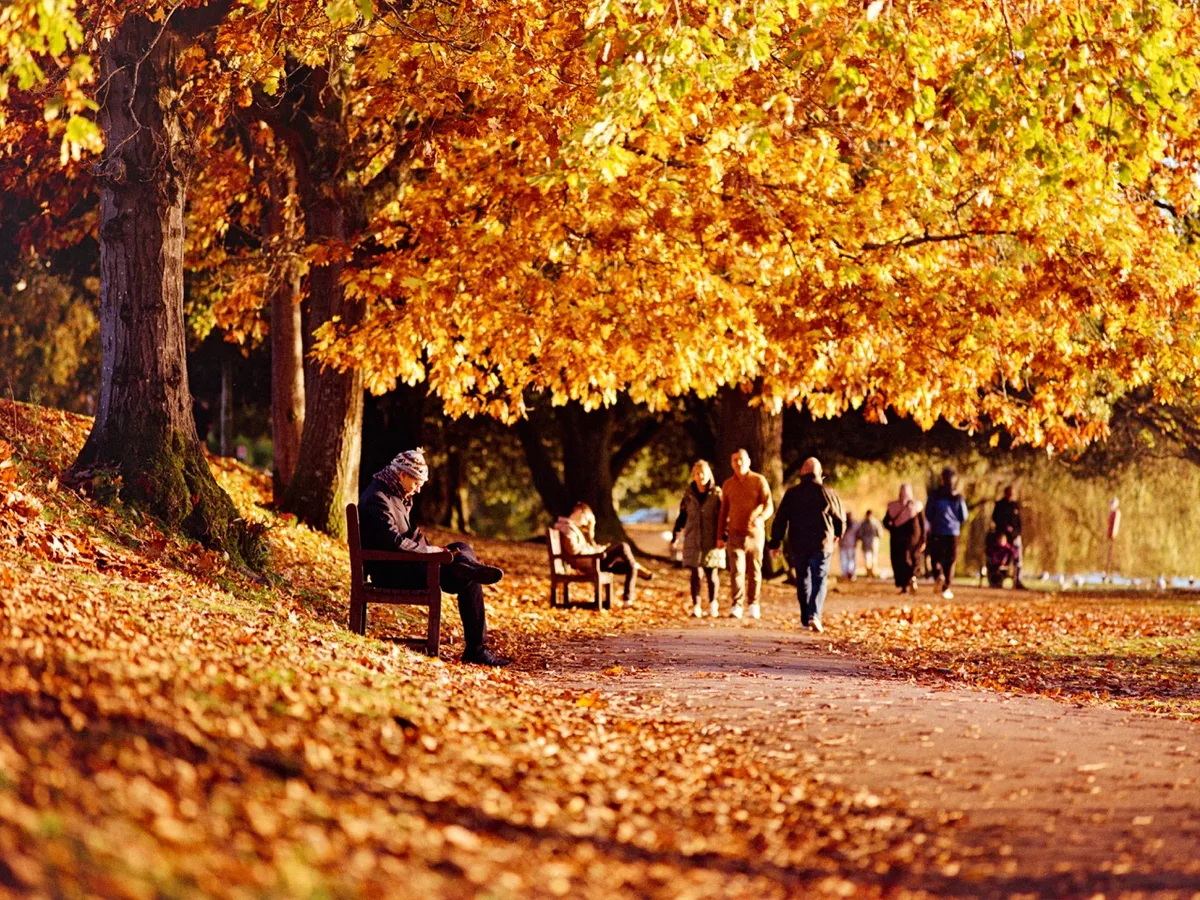 Kodak Gold 200 in 120 format, on a Mamiya 645 1000s
I consider 200 speed "every day" film. This is what we all used to shoot back in the 90s in our compact cameras, and what most disposable cameras and 110 film was rated at. It's good outdoors in bright sun and usable indoors with wide-aperture lenses or flash. It tends to still be of a good resolution but doesn't require quite as much light as the 100 speed films.
Here's some common films of this type I've shot recently:
- Kodak Gold 200
- Kodak ColorPlus 200
- Kodak Portra 160
- Fomapan 200
- Kentmere 200
- Harman Phoenix (1 & 2)
ISO 400
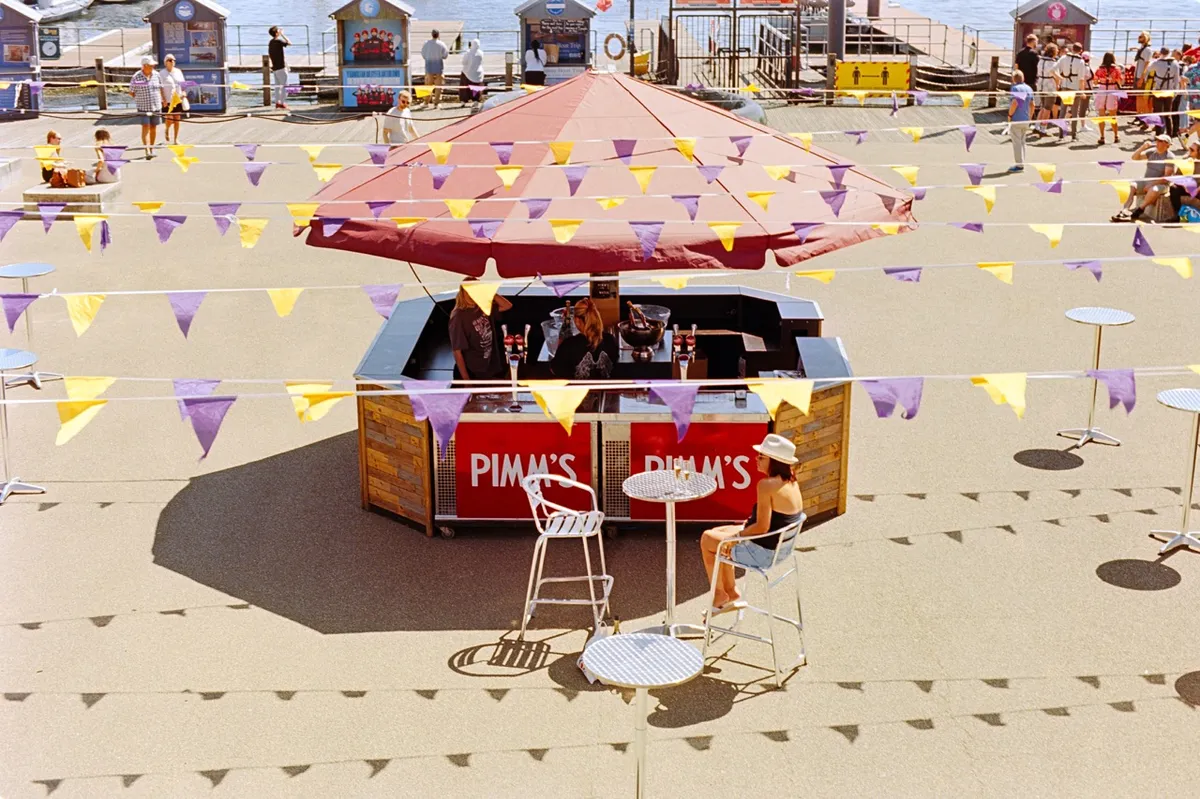 Kodak Portra 400 in 35mm format, on an Olympus OM-2n
ISO 400 speed film is what I consider to be the most flexible type. It's often still quite detailed with reasonable levels of grain (especially on modern film stocks) but that 400 speed opens up lots of possibilities for you, including shooting indoors without flash or in low light. If your camera doesn't have particularly fast shutter speeds, for example if the fastest it can fire is 1/1000, then you may have to use very small aperture sizes in bright sunlight with this speed film.
Here's some examples:
- Kodak Ultramax 400
- Kodak Portra 400
- Kodak Tri-X 400
- Ilford HP5+ 400
- Kentmere 400
- Fomapan 400
ISO 800 and above
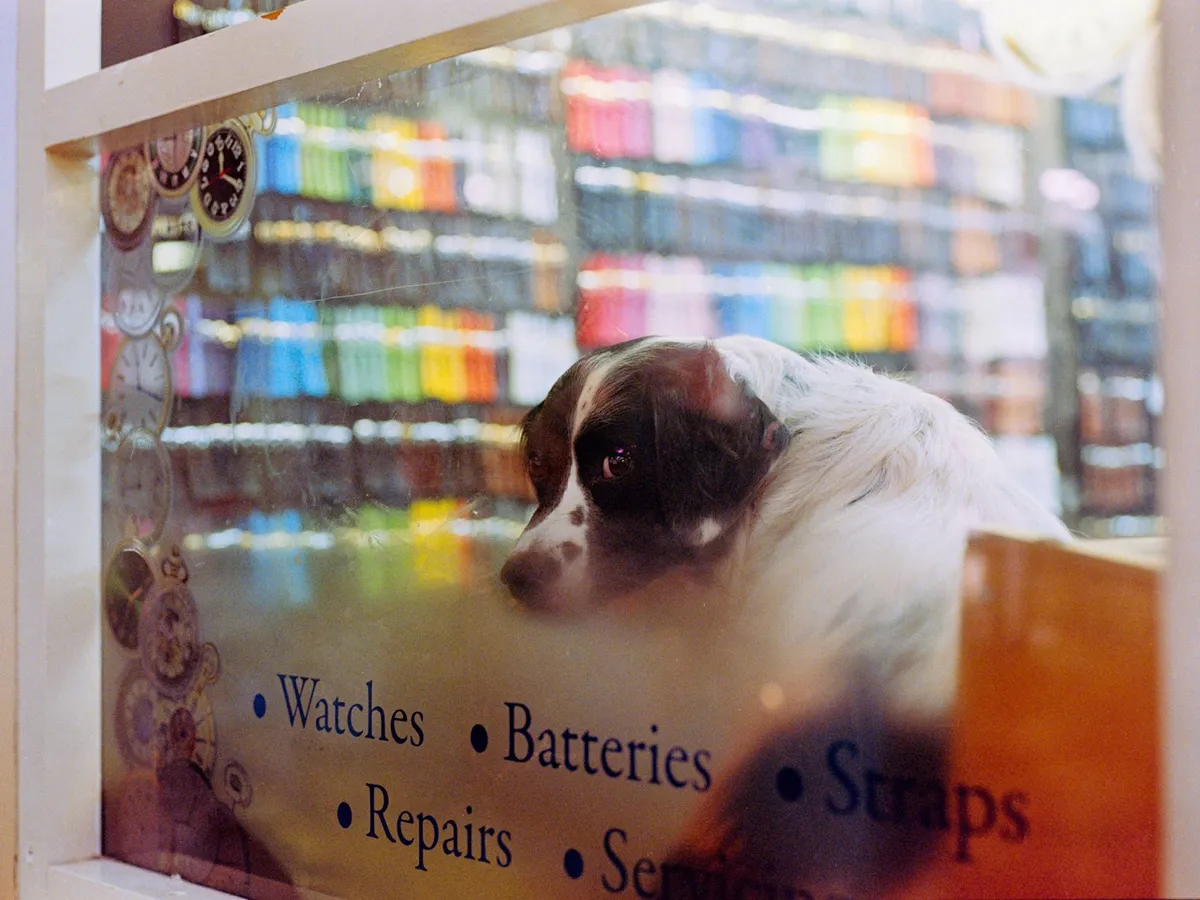 Kodak Portra 800 in 120 format, on a Mamiya 645 1000s
Back in the old days of film, there were colour films available as fast as 3200 ISO! Today, however, that speed is only seen in a couple of monochrome film stocks, and the fastest colour film you'll see is 800 ISO.
These fast films are great in low light situations and are very useful for shooting indoors. I find Portra 800 particularly useful on medium format cameras as they require more light compared to 35mm (more on that another time), and the grain from the higher speed film is less visible on bigger negatives. It's very useful for shooting medium format cameras indoors, albeit expensive. There's not many high speed films available any more so this is a shorter list of examples:
- Kodak Portra 800
- CineStill 800T (this is actually Kodak Vision 3 500T cinema film but I'll explain that more in another post)
- Ilford Delta 3200
- Kodak T-MAX P3200
I hope that helps!
There are some other subjects I'll cover in the future, including "pushing" and "pulling" film, where you change the ISO speed and development time, but for now this should hopefully give you a good idea of some common film stocks to try out for different speeds and common use-cases for them.